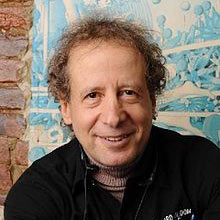
| SACRIFICIAL DEATH AS THE THE ESSENCE OF THE HISTORICAL PROCESS Richard Koenigsberg with Howard BloomST |
||||||||||||||||
Responding to Bloom’s suggestion that violence is a bonding mechanism because killing is exhilarating, Koenigsberg suggested that the essence of warfare, rather, is the desire to sacrifice one's life for an object conceived as greater than the self. Warfare is collective masochism, the will to self-destruction. Koenigsberg reminded listeners that for the most part, soldiers involved in killing during World War I did not see their victims: they shot machine guns and artillery shells and did not closely encounter the deaths they caused. Soldiers were not motivated by enjoyment of bloodshed. Koenigsberg discussed the ideology of sacrificial death as the core of civilization. For Hitler it was Germany; for the Aztecs it was the Sun God; for martyrs in the Middle East, it is Allah. Koenigsberg and Bloom explained how Japan’s 1905 victory in the Russo-Japanese War influenced European military strategists in World War I. Europeans admired the Japanese soldiers’ spiritual willingness to give their lives. The will to die was an absolute, not "victory," Harry Truman fulfilled this Japanese wish. |
||||||||||||||||