|
||
|
The King’s Two Bodies: A Study in Medieval Political Theology Excerpts from one of the most important books of the 20th Century): 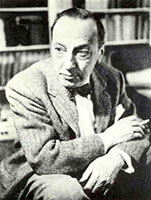
Ernst Kantorowicz was a historian of medieval political and intellectual history. He taught at the Institute for Advanced Study in Princeton, where he published his masterpiece, The King’s Two Bodies, which explored medieval political theology and how theologians, historians and canonists in the Middle Ages understood the office and person of the king, as well as the idea of the kingdom, in corporeal and organological terms. This classic described the figure of the European monarch as a unique product of religious and legal traditions that eventually produced the notion of a “king” as simultaneously a person and an embodiment of the community of the realm. 7—The King has in him two Bodies, viz., a Body natural, and a Body politic. His Body natural (if it be considered in itself) is a Body mortal, subject to all infirmities that come by Nature or Accident, to the Imbecility of Infancy or old Age, and to the like Defects that happen to the natural Bodies of other People. But his Body politic is a Body that cannot be seen or handled, consisting of Policy and Government, and constituted for the Direction of the People, and the Management of the public weal, and this Body is utterly void of Infancy, and old Age, and other natural Defects and Imbecilities, which the Body natural is subject to, and for this Cause, what the King does in his Body politic cannot be invalidated or frustrated by any Disability in his natural Body. 9—Although (the king) has, or takes, the land in his natural Body, yet to this natural Body is conjoined his Body politic; and the Body politic includes the Body natural, but the Body natural is the lesser, and with this the Body politic is consolidated...And he has not a Body natural distinct and divided by itself from the Office and Dignity Royal, but a Body natural and a Body politic together indivisible; and these two Bodies are incorporated in one Person, and make one Body and not divers, that is the Body corporate in the Body natural, et e contra the Body natural in the Body corporate. So that the Body natural, by this conjunction of the Body politic to it (which the Body politic contains the Office, Government, and Majesty royal), is magnified, and by the said Consolidation hath in it the Body politic. 9—The King’s Two Bodies thus form one unit indivisible, each being fully contained in the other. However, doubt cannot arise concerning the superiority of the body politic over the body natural. His Body politic is more ample and large than the Body natural. Plowden, cont.:
13—This migration of the “Soul,” that is, of the immortal part of kingship from one incarnation to another as expressed by the concept of the king’s demise is certainly one of the essentials of the whole theory of the King’s Two Bodies. This “incarnation” of the body politic in a king of flesh not only does away with the imperfections of the body natural, but conveys “immortality” to the individual king as King, that is, with regard to his superbody. |