|
I've stated ("Koenigsberg's First Law") that wars are fought to testify to the reality of a society's sacred ideal: if so many people have died for an idea or ideology, it must be true. War performs a validation function. The purpose of warfare is not killing, but dying. Getting people on the other side to die for our own sacred ideal.
In the first World War, German soldiers were killed by French soldiers: they died for France. French soldiers were killed by German soldiers. They died for Germany.
Taking this idea a step further is the sacrificial theory: French soldiers died to demonstrate that they were willing to die for France. German soldiers died to demonstrate that they were willing to die for Germany. This is the meaning of the phrase "dying for one's country."
Soldiers on each or either side die for their own sacred ideal. The focus shifts away from killing to dying. The fundamental variable is not killing, but dying: testifying to the depth of one's devotion to a sacred ideal.
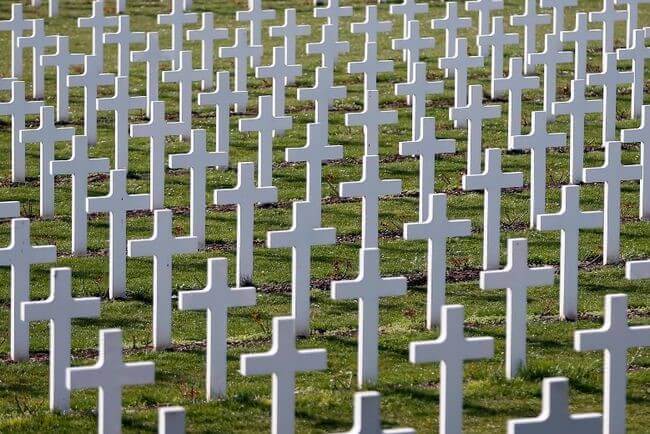
We may take this a step further (see photo below): The purpose of warfare is to create memorials to the dead. Memorials are permanent markers testifying to the reality of one's nation's commitment. The crosses below testify to the sincerity one's nation: the depth of their commitment or devotion to their own sacred ideal. They also provide a truth function: if so many of our own men have died for our own sacred ideal, it must be real.
Richard Koenigsberg
|