|
||
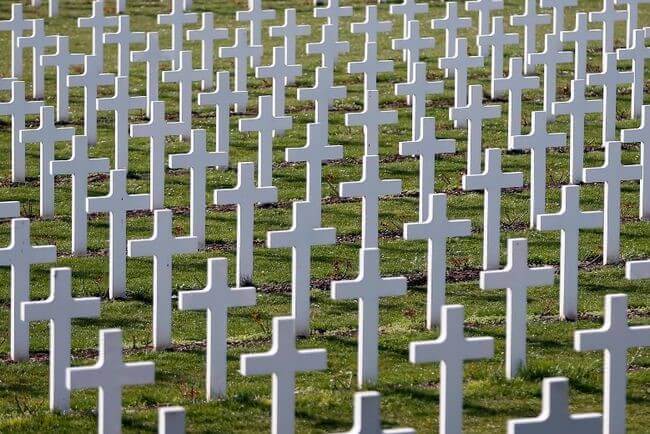
What was this cause? The cause was the nation itself. The crosses stand as validation of the greatness of each nation—for which soldiers had given their lives. The cliché is that war represents the “breakdown” of civilization. Precisely the opposite: Warfare represents affirmation of civilization—a certain kind of civilization defined by the nation-state. During the First World War, each nation asserted the reality of its own sacred object. Each nation struggled to assert its superiority—demonstrate its depth of devotion by showing its willingness to gift young men. There is a deeper level: the nature of the entity to which lives were sacrificed—didn’t matter. What was essential was that sacrifices continued to be performed. This was a world war. No nation wished to be left out. It was a family affair. Each nation wanted to partake of the ritual. |