| Viewing the battlefield from a distance, it is not clear which side is the winner and which the loser. The nation-state feeds alike from both sides (Paul Kahn) |
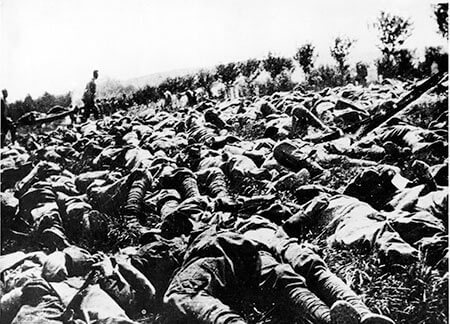 The bodies of Italian soldiers dead on the battlefield, victims of a gas and flame attack during World War I.
|
| Viewing the battlefield from a distance, it is not clear which side is the winner and which the loser. The nation-state feeds alike from both sides (Paul Kahn). |
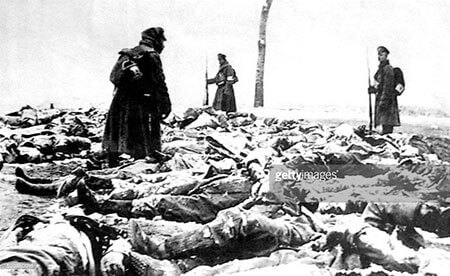 Battlefield covered with the dead bodies of Russian soldiers (World War I).
|
From: Sacred Violence: Torture, Terror, and Sovereignty (2008)
It didn't really matter which side had won the battle and which side has lost: as long as the national-gods were fed with the blood of sacrificial victims.
From the gods' point of view, neither side won or lost. The god could not lose in any case.
| Viewing the battlefield from a distance, it is not clear which side is the winner and which the loser. The nation-state feeds alike from both sides (Paul Kahn) |
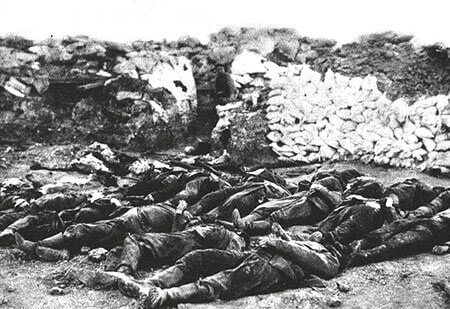 German bodies after a battle in the Spring of 1915.
|
“Nation state fed alike from both sides.” It didn't matter which nation had won a particular battle and which nation had lost.
As long as there were dead bodies on the battlefield to feed the hungry nation-state.
|