|
This groundbreaking book brings an spatial perspective to our understanding of genocide through a fresh interpretation of Germany under Hitler, Cambodia under the Khmer Rouge, and China’s Great Leap Forward famine under Mao.
James A. Tyner's powerful analysis of these horrifying cases provides insight into the larger questions of sovereignty and state policies that determine who will live and who will die.
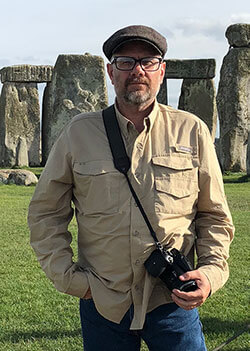
James A. Tyner is professor in the Department of Geography at Kent State University.
|
|
Chapter II of Genocide and the Geographical Imagination (James Tyner), “The State Must Own Death.” is the perhaps best current synthesis of research on the origins and development of the Nazi’s “Euthanasia Movement”—and how medical killing led directly to the Holocaust.
________________________________
Scroll down to the right for information on Genocide & the Geographical Imagination: Life & Death in Germany, China & Cambodian--and how to obtain your own copy.
________________________________
Tyner cites the famous passage from the Allowing the Destruction of Life Unworthy of Life (Alfred Hoche and Karl Binding, 1920), the seminal text justifying, authorizing, and generating state murder:
If one thinks of a battlefield covered with thousands of dead youth and contrasts this with our institutions for the feebleminded with their solicitude for the living patients—then one would be deeply shocked by the glaring disjunction between the sacrifice of the most valuable possession of humanity on the one side, and on the other the greatest care of beings who are not only worthless but even manifest negative value.
The message is clear: If the state is willing to sacrifice the lives of its soldiers, why should so much energy and so many resources be expended to keep mental patients alive? If the state is willing to kill its own soldiers (its most valuable possession), why can’t it also kill human beings who are deemed “worthless?”
This syllogism would eventually would lead to the Holocaust: if we can ask our soldiers to die for Germany, why can't Germany also sentence Jews--enemies of the German people--to death?
.
|