Part II: The Trump Mental Health Pandemic
MAKING CONSCIOUS THE UNCONSCIOUS ON THE STAGE OF POLITICAL REALITY
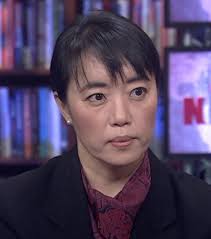
Bandy X. Lee: Forensic psychiatrist, violence expert, president of the World Mental Health Coalition (worldmhc.org), and editor of "The Dangerous Case of Donald Trump.”
A blow-by-blow account of how mental health experts warned that what happened would happen — that a president was likely going to kill (hundreds of) thousands of Americans — but went unheeded
PART II
Trump's psychology could not help but make things worse. Going further back, his lack of interest in prevention and public good led to the depletion of funding and withdrawal of support for great public health institutions such as the U.S. Centers for Disease Control and Prevention (CDC) and the World Health Organization (WHO). These acts alone probably hampered worldwide containment of the pandemic — perhaps even its emergence into a pandemic in the first place — as well as worldwide response.
While he might have outdone the authoritarian Chinese government in denial, reprimand of medical experts, and incapacitation of scientific teams working on pandemics, he did not hesitate to call the novel coronavirus “Chinese virus,” in order to deflect blame while creating new targets for attack. He similarly blamed the WHO for his own failures, halting funding and withdrawing membership at a critical time when the world depended especially on the WHO to fill in where the weakened CDC was no longer available. Finally, his preoccupation with his self-image and reelection prospects compelled him to dominate daily press briefings and to place the public in harm’s way by touting unproven treatments, spreading misinformation, and modeling disease-spreading behavior.
Trump ridiculed masks. He said they could cause infections, and he applauded people who spurned them. Polls taken in late May … indicated that Trump’s scorn was suppressing mask use. A Morning Consult survey found that the top predictor of non-use of masks, among dozens of factors tested, was support for Trump. An NBC News/Wall Street Journal survey found that people who seldom or never wore masks were 12 times more likely to support Trump than to support his opponent, former Vice President Joe Biden. Some scientific models imply that Trump’s suppression of mask use may have contributed to hundreds, if not thousands, of deaths.
In this manner, Donald Trump succeeded in making the U.S. the pandemic epicenter of the world, despite having all the medical, financial, and military resources the rest of the world could only envy. It is now responsible for a third of the world’s confirmed coronavirus cases and a quarter of its deaths, while only 1/24 of its population. Nevertheless, as expected and as we said repeatedly, his behavior would not change but only worsen:
On June 10, Trump announced that he would resume holding political rallies. He targeted four states: Florida, Texas, Arizona, and Oklahoma. The point of the rallies, he explained, wasn’t just to boost his campaign but to signal that it was time to “open up our country” and “get back to business.” When reporters raised the possibility that he might spread the virus by drawing crowds indoors, he accused them of “trying to Covid Shame us on our big Rallies.”
Despite being warned that infections in Oklahoma were surging, Trump proceeded with a rally at a Tulsa arena on June 20. To encourage social distance, the arena’s managers put “Do Not Sit Here” stickers on alternate seats. The Trump campaign removed the stickers. Trump also refused to wear a mask at the rally — few people in the crowd did, either — and in his speech, he bragged about continuing to shake children’s hands. Two weeks later, Tulsa broke its record for daily infections, and the city’s health director said the rally was partly to blame. Former presidential candidate Herman Cain attended the rally, tested positive for the virus days afterward, and died at the end of July.
At the rally, Trump complained that health care workers were finding too many infections by testing people for the virus. He said he had told “my people” to “slow the testing down, please.” [In] an interview with the Christian Broadcasting Network, he said he was only half-joking. He affirmed, this time seriously, that he had told “my people” that testing was largely frivolous and bad for America’s image. Weeks later, officials … disclosed that the administration, against the wishes of Senate Republicans, was trying to block funding for virus tests.
Two days after the Tulsa rally, an interviewer asked Trump whether he was putting lives at risk “by continuing to hold these indoor events.” Trump brushed off the question: “I’m not worried about it. No, not at all.” The next day, June 23, the president staged another largely mask-free rally, this time in a church in Arizona, where a statewide outbreak was underway. Days later, Secret Service agents and a speaker at the Arizona rally tested positive for the virus. On June 28, Trump urged people to attend another rally, this time featuring Pence, at a Dallas church where five choir and orchestra members had tested positive.
[Since] his interview with Wallace, Trump has attacked and belittled his medical advisers. He lashed out at Birx for acknowledging the ongoing spread of the virus. He retweeted a false claim that Fauci was suppressing hydroxychloroquine “to perpetuate Covid deaths to hurt Trump.” When Fauci told Congress that infections had increased due to insufficient mitigation, Trump rebuked him and blamed the surge on increased testing. And when Dave Portnoy, a wealthy Trump supporter, complained that his stocks tanked every time Fauci called for mitigation, Trump assured Portnoy that the doctor’s pleas would go nowhere. “He’d like to see [the economy] closed up for a couple of years,” Trump said of Fauci. “But that’s OK, because I’m president.”

His psychological need for “total authority” and intolerance for dissenting or even differing opinion makes democracy incompatible with this presidency. He has difficulty tolerating protesters especially, and since the rise of perhaps the largest people’s movement in Black Lives Matter, he has been quick to portray them as “professional anarchists, violent mobs, arsonists, looters, criminals, rioters, Antifa, and others.” Even as there has been no proof of “Antifa’s” involvement in violence, but rather of his supporters, he has used the minimal violence as a reason for his crackdown with federal forces — even as local authorities implore Congress to make it illegal to send federal agents to cities where they are unwelcome.
Even the police force has been a shocking instigator of violence, responsible for 125 documented violent acts against protesters throughout the country over an 11-day period, as if acting on the president’s cue. And as the president called journalists “truly bad people with a sick agenda,” the U.S. Press Freedom Tracker also documented over 400 direct police harassment and attacks of reporters at protests, many of whom have suffered permanent injuries, over the span of two weeks. All this is consistent with the multiple ways in which Donald Trump has directly inspired, incited, stoked, and laid down a culture of violence, as we had warned he would since the beginning.
It’s hard to believe a president could be this callous and corrupt. It’s hard to believe one person could get so many things wrong or do so much damage. But that’s what happened. Trump knew we weren’t ready for a pandemic, but he didn’t prepare. He knew China was hiding the extent of the crisis, but he joined in the cover-up. He knew the virus was spreading in the United States, but he said it was vanishing. He knew we wouldn’t find it without more tests, but he said we didn’t need them. He delayed mitigation. He derided masks. He tried to silence anyone who told the truth. And in the face of multiple warnings, he pushed the country back open, reigniting the spread of the disease.
We must go further to be accurate: it’s hard to believe that a president “genuinely cares for no one but himself, [that he] lacks the capacity to feel regret or to avoid the harm he can cause to others, [and that he] can derive a sadistic pleasure for the hurt he may create.” But this is his psychological disposition. If not for the criticism and potential economic effects that would cause problems for his re-election bid, he would only be too delighted to have people suffer and die.
Our nation is in peril, which is why we issued our “Prescription for Survival,” on March 25, 2020, recommending that sidelining or removing the president, however it is done, remained necessary for preventing the worst effects of the pandemic. We also do not believe the public should continue to be deprived of expertise, or the best available knowledge, just as it should not be deprived of facts. Knowledge saves lives and is the key to a functioning democracy, or a rule by the people for the people. In line with the above, we are urgently issuing the documents of the World Mental Health Coalition, or a collection of our letters, petitions, and conference transcripts, in order to share the knowledge we believe will be critical to the public’s ability to protect itself and to make informed decisions. We must address the primary problem that is the source of all that the excellent Slate article outlines: the president’s mental impairments. It is the key to our naming the problem and solving it.
Now Trump asks us to reelect him. “We had the greatest economy in the history of the world,” he told Fox News on Wednesday. “Then we got hit with the plague from China.” But now, he promised, “We’re building it again.” In Trump’s story, the virus is a foreign intrusion, an unpleasant interlude, a stroke of bad luck. But when you stand back and look at the full extent of his role in the catastrophe, it’s amazing how lucky we were. For three years, we survived the most ruthless, reckless, dishonest president in American history. Then our luck ran out.
It should not run out more, for it could still get a lot worse.