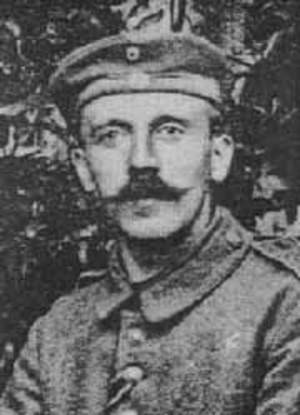
Hitler at the front during
the First World War
|
|
|
Hitler is known and remembered for his espousal and waging of warfare. Yet Hitler experienced the horror of warfare during the four years he fought in the First World War.
He was one of millions of men who had hunkered down in trenches and endured the wet and cold and mud, scarcity of food, rats, bedbugs, and endless artillery barrages that reigned down upon the pathetic men huddled in holes below the ground.
He witnessed the dismemberment and death of hundreds of his comrades—and experienced the stench of their decaying bodies. Over 4000 men in his regiment were killed, but Hitler miraculously survived. After the war, Hitler was aware that two-million Germans had died.
In the face of Hitler's experience of the horror of war and knowledge of its disastrous consequences, why didn’t Hitler abandon the idea of warfare forever? Why didn’t he become a peace activist?
On several occasions in Mein Kampf, Hitler expressed his sense of futility, disillusionment and anger toward those who had sent young men to die. In Chapter VII of Volume I, he wrote about his reaction upon learning that Germany had surrendered on November 10, 1918:
And so, it had all been in vain. In vain all the sacrifices and privations; in vain the hunger and thirst of months which were often endless; in vain the hours in which, with mortal fear clutching at our hearts, we nevertheless did our duty; and in vain the death of two million who died.
Would not the graves of all the hundreds of thousands open, the graves of those who with faith in the fatherland had marched forth never to return? Would they not open and send the silent mud-and blood-covered heroes back as spirits of vengeance to the homeland which had cheated them with such mockery of the highest sacrifice which a man can make to his people in this world?
Had they died for this, the soldiers of August and September, 1914? Was it for this that in the autumn of the same year the volunteer regiments marched after their old comrades? Was it for this that these boys of seventeen sank into the earth of Flanders? Was this the meaning of the sacrifice which the German mother made to the fatherland when with sore heart she let her best-loved boys march off, never to see them again?
Was it for this that the German soldier had stood host in the sun’s heat-and in snowstorms, hungry, thirsty, and freezing, weary from sleepless nights and endless marches? Was it for this that he had lain in the hell of the drumfire and in the fever of gas attacks without wavering, always thoughtful of his one duty to preserve the fatherland from the enemy peril?
And in Chapter X of Volume I, Hitler wrote:
If today the graves of Flanders field were to open, from them would arise the bloody accusers, hundreds of thousands of the best young Germans who, due to the unscrupulousness of these parliamentarian criminals, were driven, poorly trained and half-trained, into the arms of death; the fatherland lost them and millions of crippled and dead.
In these passages, it's clear that Hitler was aware of the horror and futility of warfare. Is this the same man who gleefully--seemingly without hesitation--initiated the Second World War, resulting in the deaths of millions of more German men? In the face of such profound disillusionment at the conclusion of the First World War, what changed his thinking?
|