IDEOLOGIES OF WAR, GENOCIDE & TERROR
Volume II (C through F)
Publications by: Nico Carpentier, Alex Chirila, Daniele Conversi, Brian Crim, Kelly Denton-Borhaug, Drew Gilpin Faust, Yael Feldman & Ljubomir Frčkoski & others |
|
Dear Colleague,
We continue with Volume II of Library of Social Science's IDEOLOGIES OF WAR, GENOCIDE AND TERROR WEBSITE, one of the world's most valuable resources presenting research and publications on the sources and meanings of collective forms of violence.
Please scroll down to review the titles and links. Please click through any link to read the paper or view the video.
Thanks and best regards,
MHGS
|

|
|
Mary Helen Guider-Shaw
Director of Public Relations
Library of Social Science
Phone: (630) 212-0485
Email: mhgs@libraryofsocialscience
|
|
|
Ideologies of War, Genocide & Terror
Publications & Video: Volume II: C-F
Campbell, David
Carpentier, Nico
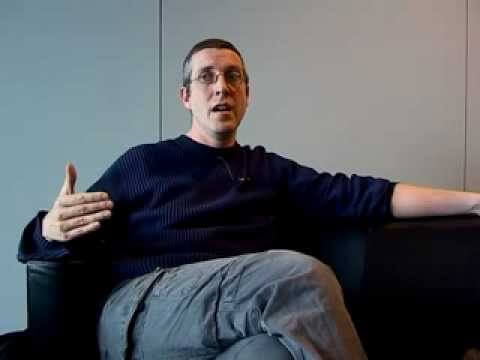
- Strengthening Cultural War Studies
Although each war has its own history, wars are built on similar ideological mappings. The series of events that compose a war appear to be highly elusive; but the core ideological models that structures war tend to be stable. Both sides present their violent practices as well-considered, unavoidable, and necessary. The construction of the Enemy is accompanied by the construction of the Self as antagonistic to the Enemy’s identity. Ironically, the identity of the Enemy as a constitutive outside is indispensable to the construction of the identity of the Self, as the evilness of the Enemy is a necessary condition for the articulation of the goodness of the Self.
Caverly, Matthew M.
Chen, Zhou
Chirila, Alexander
- Creating the Idealized Nemesis: The Collective Psychology of the Red Scare
The idealized nemesis, as constructed by the collective psychology of a nation, can take many forms, from the barbarous hordes storming the gate to the cunning opponent scheming across a global chessboard. Perhaps the most insidious of these nemeses is the enemy within. Characterized as a viral infection, the enemy within generates a range of psychological reactions on the national scale.
- Hermits and Healers: Contemporary Approaches to a Classic Spiritual Dichotomy (Video Lecture)
Given at the international conference, “Religion in a Secular Society: Challenges and Perspectives,” June 19-20, 2017, Constanta, Romania.
- Pilgrim‐Tourists: Tourism and the Spiritual Experience (Paper)
This paper examines the role of those who participate in the exchange facilitated by spiritual tourism, as well as the object of their exchange: the spiritual experience itself.
Cocks, Geoffrey

- The Body Politic: Hitler, Paranoia, and “the Jew” in Modern Germany
Hitler’s fears and fantasies were complemented by a generalized crisis in Germany having to do with the vicissitudes of the ill and well modern body. It was the experience of illness across the populations of Nazi Germany and Nazi-occupied Europe that constituted a dual, dark link between the well and ill self of the modern era and Hitler’s paranoid project for extermination of a created enemy.
Conversi, Daniele
Crim, Brian E.
- Wernher von Braun’s “Rocket Team” and America’s Military-Industrial Complex (Essay)
The story of Wernher von Braun and his rocket team’s harrowing escape from the collapsing Third Reich into the warm embrace of a former enemy is one of the more exciting and significant moments from the final days of World War II. This essay examines early intelligence assessments of Wernher von Braun’s rocket team, specifically those challenging the notion the captured Germans were the “best and the brightest.”
Delaney, Carol
Demopoulos, Panayiotis
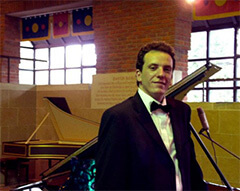
- Götterdämmerung: Suicide Music and the National Self as Enemy
“What role did music play in the death-throes of the Reich? What did the orchestras of the Reich perform in the latter stages of the war? Examining dialogues from the bunker in the expiring days of the Reich, this essay will illuminate the use of music as means to support the darker and more sinister ideogram of self-punishment and purification.”
Denton-Borhaug, Kelly

Eckhart, Dietrich
Elshtain, Jean Bethke
- Identity, the State and Sacrifice
“The Sovereign may bear a masculinized ‘face’ but the nation itself is feminized, a mother, a sweetheart, a lover. One can rightly speak, as Anderson does, of ‘political love, a love that retains the fraternal dimensions of medieval caritas,” but incorporates as well a maternalized loyalty symbolized domestically. The nation is home and home is mother. No more than one chooses one’s parents does one choose one’s country and this adds even greater force to the nature of political love. We fall in love early through language, ‘encountered at mother’s knees and parted with only at the grave,” and through this language ‘pasts are restored, fellowships are imagined, and futures dreamed.’”
Faust, Drew Gilpin
Feldman, Yael S.

- Dying for the Motherland: Orthodox Christianity and the Invention of “Isaac” as a Jewish Military Hero (Essay)
The willingness to die for one’s country, be it a fatherland or motherland, seems to derive from a much older human ‘habit’ or ‘reflex’— the universal need to secure one’s well-being by appeasing the gods, or their human representatives (Nietzsche, Genealogy, 61). This appeasement began as a gift giving, or—at times of special duress—by giving up life itself, whether of oneself or of one’s loved ones.
Fornari, Franco
- The Psychoanalysis of War (Book Excerpts)
War is a spectacular establishment of a general human situation whereby death assumes absolute value: the ideas for which we die have a right to truth, because death becomes a demonstrative process.
- The Psychoanalysis of War (Book Review)
The spirit of sacrifice is intimately related to an ideology in the name of which one may sacrifice oneself. What is this “absolute and unconditional something” that would somehow justify the “establishment of a masochistic-sacrificial position?” The masochistic-sacrificial position (e.g., the role of a soldier) is idealized—becoming a kind of “supervalue”—because it is put into the service of “that absolute and unconditional something.”
Frank, Walter S.
Freud, Sigmund
Fritz, Stephen G.
Frčkoski, Ljubomir
Fürst von Urach, Albrecht
|
|
|