|
During the Aztec period, one Mexican city-state fought other Mexican city-states with the objective of capturing sacrificial victims--that then became offerings to the gods.
Upon returning from a typical battle, Aztec warriors reported to their King, Moeteuzcoma, providing an account of what had transpired. They told him that they had taken a goodly number of captives, but that 370 of their own warriors had died or been lost through capture. Moeteuzcoma replied: “Behold, brothers, how true was the word of the ancestors who taught us that the sun…feeds alike from both sides” (Brundage, 1986).
In other words, although conquest—winning or losing—was one dimension of Aztec warfare, from the god’s point of view it didn't matter which side won or which side lost.
What is crucial to understand is that the sun-god could not lose in any case. Whatever the outcome of a battle, whichever side won and whichever side lost, the sun god--in any case--would be fed with the bodies and blood of sacrificial victims. This was the purpose of Aztec warfare: to feed the sun-god.
In the West, on the other hand, we don't understand warfare as a sacrificial ritual. Rather, we insist that the purpose of war is to "win." From this perspective, the maiming and death of soldiers (and civilians) in battle represent unfortunate by-products as nations or societies pursue presumably real or "rational" objectives.
We have not, heretofore, considered the hypothesis that killing and dying constitute the fundamental purpose of battle or warfare
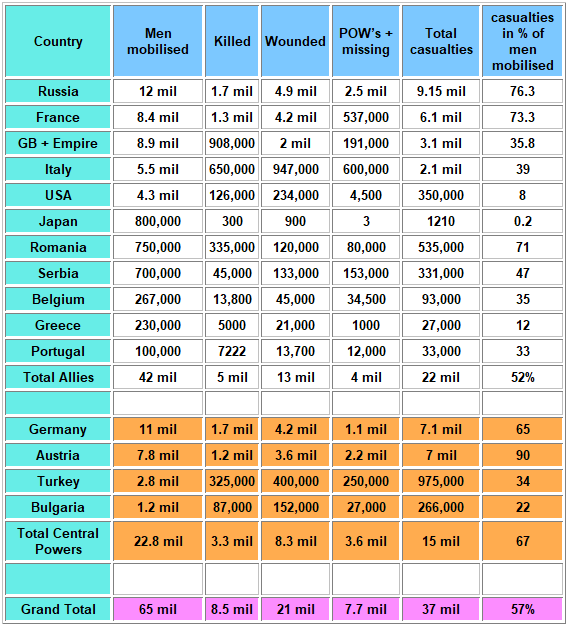
Conceiving of the First World War according to our conventional way of thinking, we state that when a soldier dies he has been "killed by the enemy." When a French soldier got out of a trench and ran into German machine gun bullets and artillery shells, we say that the French soldier had been killed by Germany.
When a British soldier got out of a trench and ran into German machine gun bullets and artillery shells, we say that he had been killed by a German.
When a German soldier got out of his trench and ran toward the British trench, we say that he had been slaughtered by the British.
Wouldn’t it be more parsimonious to say that French soldiers were killed by the French nation and its leaders—who asked them to get out of the trench and to run into German artillery shells and machine-gun fire?
Wouldn’t it be more accurate to state that the German soldier was killed by the German nation and its leaders—who asked him to get out of a trench and run into French artillery shells and machine-gun fire?
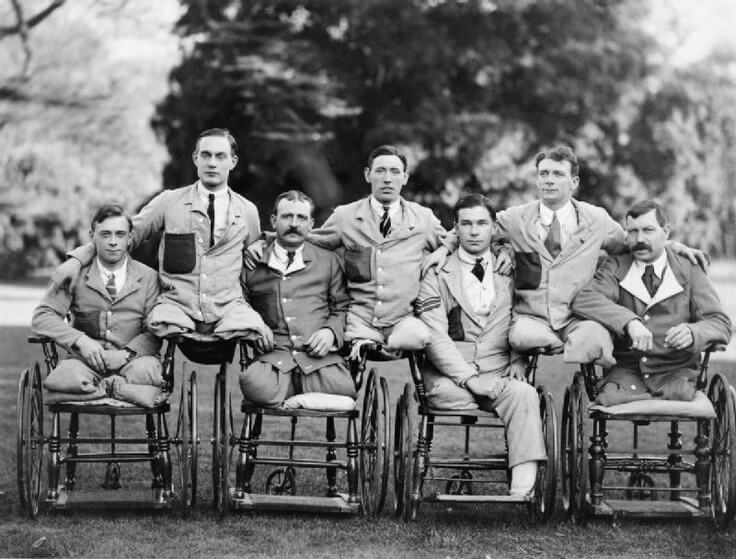
In the First World War, nation-states killed their own soldiers, but pretended they were not doing so, by delegating the killing of soldiers to the enemy. Soldiers, as Carolyn Marvin put it, are the "sacrificial class." In battle, the enemy executes members of the sacrificial class.
|