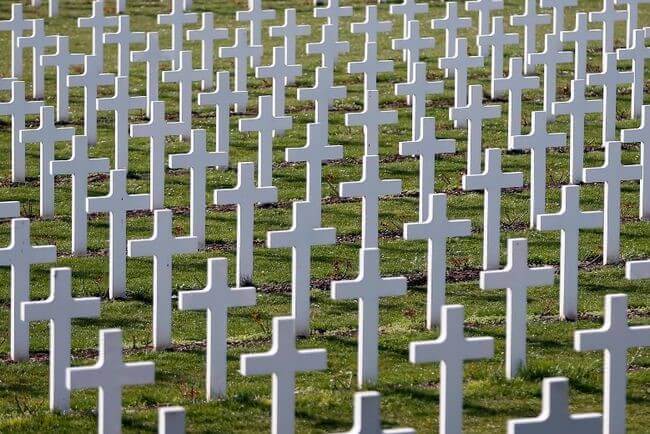
This note is from me, Mary Helen Guider Shaw, Director of Public Relations at Library of Social Science. Please scroll down to the bottom of this page to review Koenigsberg's Law of Sacrifice before reading this note.
Ten years ago, a Library of Social Science staff member wrote to Professor Adam Jones, then book review editor of the Journal of Genocide Research, requesting a copy of a review of Nations have the Right to Kill that had appeared in the Journal. We did receive a copy of the review, which is reproduced here.
Professor Jones, a major scholar on genocide, has authored over fifteen books (scroll down the page at the link for information on his titles).
He has cited Richard's theory on the sacrificial meaning of warfare on a number of occasions, but never developed them in a substantial way.
Lo and behold, Koenigsberg received a test message from Jones on May 3, 2020 (through Facebook) that included a copy of his previous correspondence with Richard from ten years before (dated October 15, 2010, 9:49am). Apparently, Adam was aware of Richard's theories, but it took quite a while for them to sink in.
__________________________________________________________________________________
Here is Adam's message of May 3, 2020:
"Richard -- I came across this interesting interview with Drew Goddard, director of the cult-classic horror-comedy "The Cabin in the Woods." His comments at the end of the interview made me think of your work and theses. Have you ever thought of incorporating an analysis of horror tropes? Goddard: "The question that is interesting to me is – why do we feel this need to marginalize youth on screen? Why do we feel this need to idealize youth, and then slaughter them?
"What is it about that that is so satisfying to us as viewers? And it’s not just in movies, it happens in society. As I get older I notice it more. We take youth, and we build it up to be this great thing. We package it and say, 'Everyone in society fits into one these boxes.' And then we destroy it. We rip it down. "That’s been happening forever, you know?
"We talk about that in Cabin [in the Woods], that this is not new. There’s a timeless quality to our destruction of youth that’s very interesting to me. I feel Cabin is much more a critique of that – of those things that the horror movie suggests are deep within us as a people. To me, that’s fascinating."
__________________________________________________________________________________
Richard's response to Professor Jones was as follows: (Please scroll down to the bottom of this page for Koenigsberg's Law of Sacrifice before reading this letter).
"My thesis, Adam, is not only about the idealization and slaughter of youth (as an empirical reality). What I’m suggesting is that the slaughter of young men (and my expertise is only on warfare) serves a societal function. It’s a way of keeping society and its ideas alive. The death of young men (and memorialization of them—see below) functions to testify to the truth or validity or reality of a society’s ideology. The slaughter of young men is in the name of confirming the reality of a societal idea (one’s nation, in the case below).
"The dynamic is, fundamentally, identical to the dynamic of Islamic terrorism. We don’t say that the Islamic leaders marginalize and idealize and slaughter young men. We say that the death of young men (generated by Islamic leaders) is for the sake of Allah.
"It’s not to make the young men suffer and die. The young men are used—perform a societal function—in the name of demonstrating devotion to Allah. Their death has a profound purpose. Similarly, the Generals of the First World War sent young men to die—not to make them suffer—but as a testimonial to the nation that they were dying for—demonstration of their devotion.
"The difference is that in Islamic society they know the purpose of the sacrificial death, whereas in the West we are unconscious of the reason we send young men to die. Very, very sad."
Thanks for writing.
Best regards, Richard K.