|
PLEASE CLICK THE LINKS BELOW TO OBTAIN ACCESS TO ANY PAPER
Click here for a complete list of documents currently available on our IDEOLOGIES OF WAR, GENOCIDE AND TERROR WEBSITE
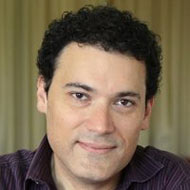
Chirila, Alexander

The idealized nemesis, as constructed by the collective psychology of a nation, can take many forms, from the barbarous hordes storming the gate to the cunning opponent scheming across a global chessboard. Perhaps the most insidious of these nemeses is the enemy within. Characterized as a viral infection, the enemy within generates a range of psychological reactions on the national scale.
Given at the international conference, “Religion in a Secular Society: Challenges and Perspectives,” June 19-20, 2017, Constanta, Romania.
This paper examines the role of those who participate in the exchange facilitated by spiritual tourism, as well as the object of their exchange: the spiritual experience itself.
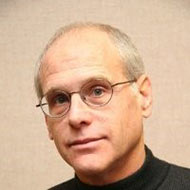
Strenski, Ivan

I am trying to see how well I can move along understanding of the phenomenon commonly, but problematically, called suicide bombing. As a student of religion, I am particularly interested in seeing how far some of the perspectives developed in the modern study of religion might assist this process of making sense of a troubling phenomenon of our own time. Here, I propose that we need to pay greater attention to the ‘sacrificial’ designations of these “human bombings”.
To understand Muslim ‘human bombers’, we must see them within the discourse of jihad, but also within that of ‘sacrifices’ and ‘gifts’. ‘Human bombings’ are not, therefore, simply matters of utilitarian military tactics, but are also religious and social as gifts, martyrdoms and sacrifices. This article proposes that we need to pay greater attention to the ‘sacrificial’ designations of these ‘human bombings’ as made by Muslims and which are rooted in Islamic discourse.
Sacrifice means loss, giving up, destruction and death. But, much talk about sacrifice carries on as if this loss, this subtraction, actually achieves addition. The soldier ‘sacrifices’ themselves in battle, but this doesn’t count as diminishment. It actually adds to whatever social body of reference is in play. So, the question is why and how can sacrifice add to the social whole, when, in the fact of destruction and death, it subtracts from the social whole, by removing one of its members from the body of the living?
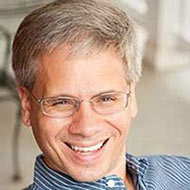
Vlahos, Michael

The great sociologist Robert Bellah called America a civil religion in 1967, and he was met with denial and disbelief. Perhaps if he had just gone a bit further he might have mercifully lifted the veil for all of us: America is not just civil religion — it is honest-to-God church religion.
Imagined kinship is the foundation of national community. Imagined kinship is the cultural process that permits people in a society to collectively believe that they belong to each other—that they are part of the same kinship construct—even though they are most likely strangers to each other. Imagined community also makes the state the trusted manager of this process—powerfully affirming our connection and commitment to each other, for example, in war—so that the collective kinship construct is essential to the very idea of a modern nation state.
’“Terrorism” inhabits America’s civil-religious consciousness just as it did for Tacitus, representing “the enemy of mankind:” as an affront to light and truth. Terrorism, in the American experience, issues a divine test: Is America still beloved of the Almighty, and still his agent to redeem humankind? If not, then what shall be America’s path?’
Michael Vlahos podcast on the John Batchelor radio show: “We had to create—not just a mythic moment—but a moment of unique American sacrifice. We managed to do that. As we look back, it is the great liturgy of the American experience—not just in World War II—but of the America that was born on that day. It’s a kind of high mass of the nation—of the American ethos.”
The 20th century’s wars—from 1914-1951, and their aftermath—killed perhaps 150 million individual human beings. We casually ascribe this calamity to madness, evil, or the inevitable efficiencies of an industrial economy. Yet I argue that this killing was embedded in the desire of peoples to fulfill—through war—the vision that drove them. This was the paradoxical, unconfessed vision of Modernity—which replaced universal institutions of collective identity (for centuries vested in social order and Church) with a dynamic new alternative.
“What makes terrorism so powerful is that it leverages the most powerful of human actions: the sacrifice. For thousands of years, human sacrifice has represented a sacred rite, with many layers of explicit ritual and symbol—in which our most precious loss transforms into our most precious gift. Think of the sacrifice—enacted and memorialized—as the mortar of our collective belief and belonging.”
In his essay, “The Rites of Spring,” Michael Vlahos stated that War in Modernity was an “extended ritual demanding mass sacrifice in which the literal ‘body and blood’ of millions at once renewed and re-fertilized the nation.” However, this national theology “no longer rules America as it once did.” The fervent faith of a whole nation—leading to sacrifice on the high altar—has been “emptied of belief.”
______________________________________________________________________
Prioneering the online publication of scholarship, Library of Social Science attracts a word-wide audience--exploring the sources and meanings of collective forms of violence. Our Ideologies of War, Genocide and Terror Website presents documents--papers, essays, speeches, videos and statistical data--establishing the foundation for the field. Our Library of Social Science Newsletter publishes papers and essays by some of the most prominent authors in the world. Selecting articles to publish and distribute, we adhere to standards equivalent to the most rigorous refereed journals--with the difference that more people read one of our publications in a day than read the typical journal article in its lifetime.
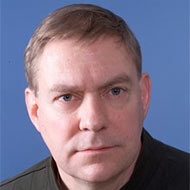
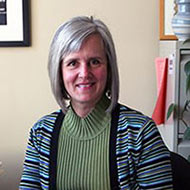
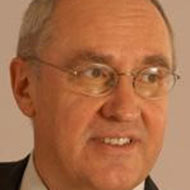
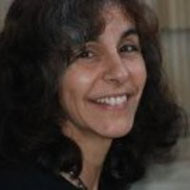
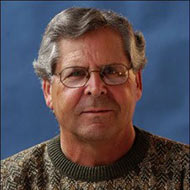
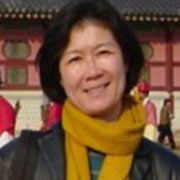
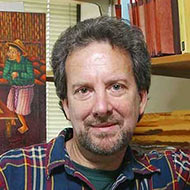
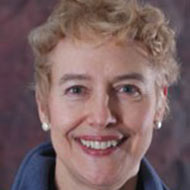
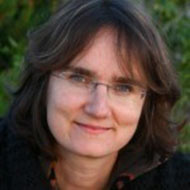
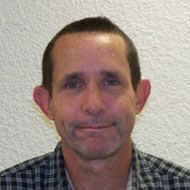
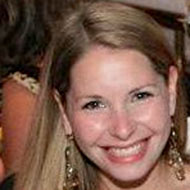
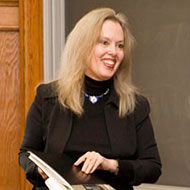
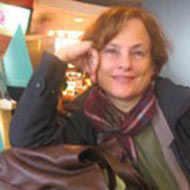
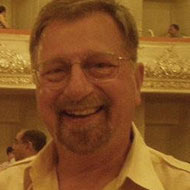
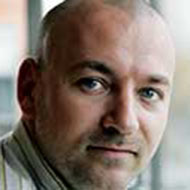
Below are names and photos of a few of the "stars" whose work Library of Social Science has published. The name of each article appears below the author's photo--please click through to read these important contributions to scholarship. Enjoy!
Richard Koenigsberg, PhD
Professor Michael Vlahos
Professor Ivan Strenski
Mary Helen Guider-Shaw, Director of Public Relations
Professor Alexander Chirila
|