| Franco Fornari’s hypothesizes (1974) that war represents a “voluntary destruction of previously accumulated reserves of human capital,” an activity performed with the intention to “sacrifice a certain number of lives.”
Norman O. Brown states (1959) that archaic gift-giving (the potlatch being an example) is “one vast refutation of the notion that the motive of economic life is utilitarian egoism.” Archaic man gives because he wants to lose: “the psychology is self-sacrificial.” The need to produce an economic surplus is connected with the sacred: “Gifts are sacred and the gods exist to receive gifts.”
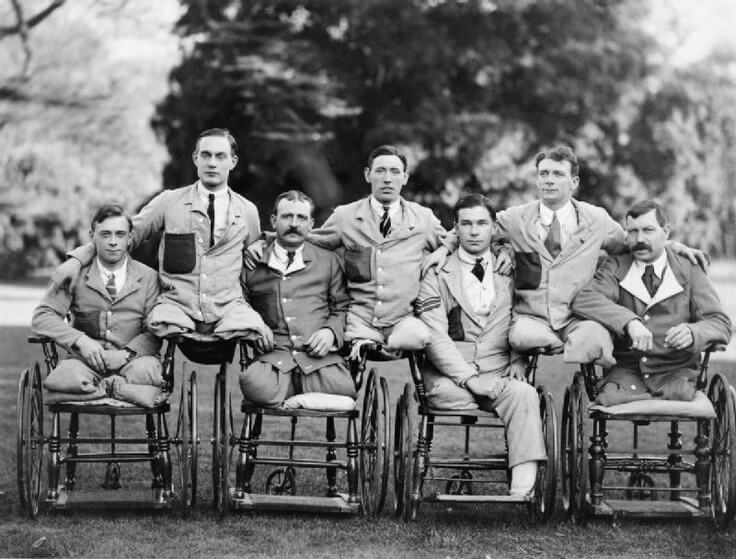
In Dismembering the Male, Joanna Bourke (1996) observed that public rhetoric in Great Britain during and after the First World War judged soldier’s mutilations to be “badges of their courage,” the hallmark of their glorious service, “proof of patriotism.” The disabled soldier was not less but “more of a man.” A writer in The Times (1920) stated, “Next to the loss of life, the sacrifice of a limb is the greatest sacrifice a man can make for his country.”
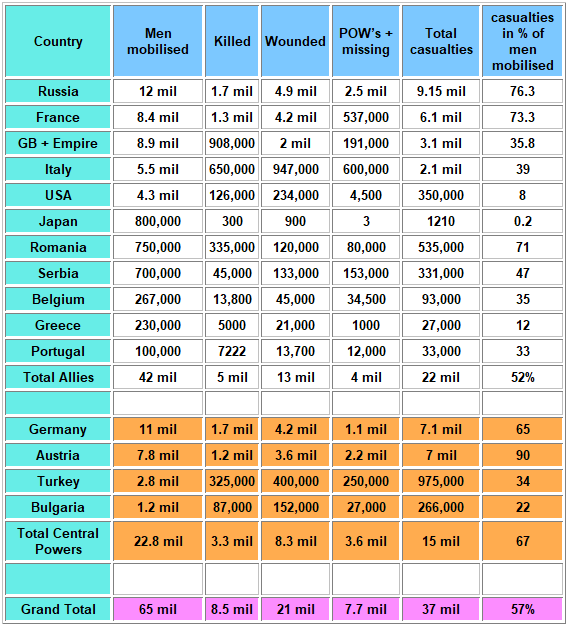
During the First World War, some men gifted their entire bodies, and others gifted body-parts. All in the name of the gods that men worshipped at the time, given names like France, Great Britain, Germany and Russia.
In the First World War, how hungry these gods were.
|