|
This is the greatest lecture I've ever heard on the First World War--and its implications for the rest of the 20th Century.
Professor Weiner expresses, what shall we say, indignation, amazement, bewilderment--as he tells us what occurred. He knows that the First World War was an extraordinary event and does not suppress his astonishment.
Although he is highly critical of how the war was fought, Weiner--like most historians--is embedded within conventional narratives.
But at one point, he cannot contain himself: the truth burst forth in the few sentences at the location below
You can hear these sentences at 22:05; and I highly recommend that listen to the entire lecture. You'll be deeply satisfied.
Best regards,
Richard K.
PS: His lecture reminds me of why I attended Wesleyan University. I had been awarded a full-scholarship to University of Pennsylvania after having broken my high school's cross country record (12:30 for 2 1/2 miles) and run at Madison Square Garden (a life-long dream) when I was seventeen years old.
However, when I visited Wesleyan to check it out the school, I sat in on a class by a history Professor (Willard Trask). This was different than high school. I was hooked. I abandoned my athletic career and turned to scholarship...becoming an athlete of the mind.
|
"All the capacity of industrial society—straining at the bit for destruction. One of the French soldiers called it extermination. I call it routinized, mechanized genocide: The genocide of people on their own citizens."
Professor Weiner at 22:05 of the video.
|
 |
|
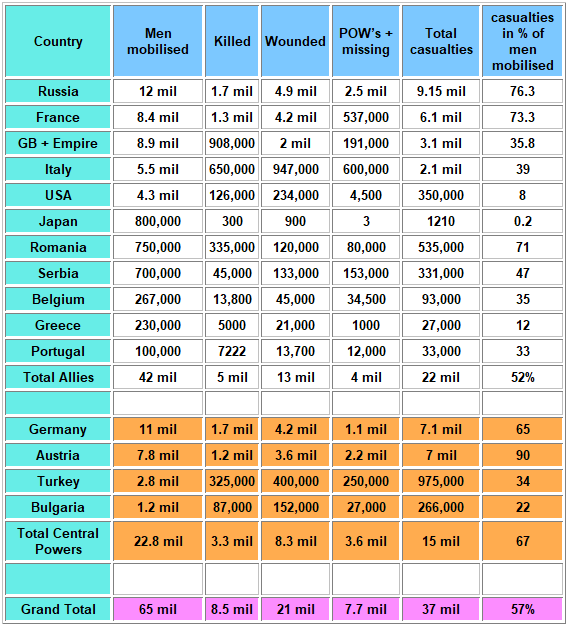
First World War Casualties
|