|
Jay Winters is perhaps the greatest historian of the First World War. I've watched his magnificent video series (The Great War and the Shaping of the 20th Century, 1996) many times. I suggest you click through to the link...and rest into the video. The series conveys the horror of the First World War--how nations throughout the world got sucked in--seemingly with no way out.
In a tone of humility and baffled bewilderment, Winters sums up a lifetime of research:
- The war solved no problems. Its effects, both immediate and indirect, were either negative or disastrous. Morally subversive, economically destructive, socially degrading, confused in its course, futile in its result, it is the outstanding example in European history of meaningless conflict.
Based on my own research of 30 years, I think this assessment is accurate: The First World War was useless, self-destructive, and futile--solving no problems. Tragic. Full of sound and fury.
But did this war signify nothing? Was it meaningless?
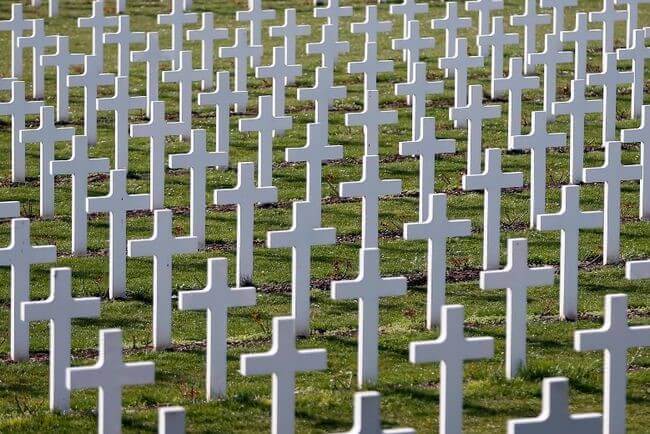
To understand the meaning of the First World War, scroll to the photo below. The meaning of the war lay in the creation of memorials to the dead.
In the First World War, people died and killed in the name of—for the sake of—their societies. Lives were sacrificed to entities with names such as “France” and “Germany” and “Great Britain.” The First World War was a massive demonstration of devotion: proof that people "loved their country."
Love of country and mass-murder. The beloved object and the pathetic result. We hesitate to put these two variables together.
The First World War was fought as a testimonial to the greatness of one's nation; to the reality of a one's society and truth of its sacred ideals. If so many people die for an idea—it must be real.
Best regards,
Richard Koenigsberg
PS: Responding to my recent Newsletter, "Three-million British casualties," I received an email from the great anthropologist, Emiko (Ohnuki-Tierney). She quotes a kamikeze pilot who said, "Our government is murdering us." Emiko poses the question, "Why do soldiers get lured into it?" And mentions her book Flowers that Kill. Please click through the link and purchase a copy from Amazon.
Emiko has authored many books, but she sums up the question I have been posing for thirty years (principle of parsimony). Why do governments murder their own people? The answer to this question is central to understanding the history of the 20th century.
PPS: Would love to hear from those of you who have the courage to open my emails and read the Newsletters. I would appreciate feedback. Please send me an email, rak@libraryofsocialscience.com Thanks you.
|