|
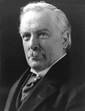
The Holocaust as a Function of the First World War: In the First World War, David Lloyd George said, warm human hearts were “thrown by the millions into the furnace.” The nation-state was like a hungry god whose continued existence required that it be fed with human bodies. Two decades later—in Germany—this metaphor became reality: human beings literally were thrown into furnaces. The Holocaust was a direct function of the First World War. Hitler's project was modeled on the "achievements" of the Generals of the First World. As these Generals mercilessly and endlessly killed their own soldiers during a four year period (1914-1918), so Hitler would mercilessly and endlessly kill Jews. |
|
Into the Furnace of War
Richard A. Koenigsberg
|
||
Responding to an earlier Newsletter post in which this passage appeared, Professor Lawrence Besserman wrote: "Thrown into the furnace"—horrific quotes, and I thought only the Muslims believed in death as victory. But the metaphor of men thrown into the furnace implies something we might be overlooking: bodies/lives as fuel to drive the engine of the state. An Industrial Age perversion that mirrors the ancient conception that the gods need human sacrifice to be satisfied? That's what the metaphor of "thrown into the furnace" evokes for me. Bodies as "fuel to drive the engine of state.” Nation-states, during the First World War, were hungry gods that required to be fed with human bodies--in order to say alive. The First World War was a massive ritual of human sacrifice--making the Aztecs look like pikers. Analyzing the letters of French soldiers who fought in the First World War, John Horne (in Coetzee and Shevin-Coetzee, 1995) discovered that the theme of many of them was the idea of sacrifice as a source of redemption for the French nation. Contemplating the warriors who had fallen around him, French soldier J. Saleilles wondered whether their “gift of blood” was not the “supernatural source of the renewal of life which must be given to our country.” What does it mean to say that the renewal of a nation’s life depends upon a “gift of blood?" This phrase links the soldier’s death to the more abundant life of one’s nation. When injury or death occurs on the battlefield, the blood contained within the body of the soldier flows out of him—and into the body politic. The body and blood of the soldier fuels or regenerates the nation. Writing in 1916, P. H. Pearse (in Kamenka, 1973)—founder of the Irish Revolutionary movement—observed with pleasure the carnage of the First World War: The last sixteen months have been the most glorious in the history of Europe. Heroism has come back to the earth. It is good for the world to be warmed with the red wine of the battlefield. Such august homage was never before offered to God as this—the homage of millions of lives given gladly for love of country. The world, Pearse said, needed to be warmed with the “red wine of the battlefield.” The outflowing of blood—millions of lives “given gladly for love of country”—constituted a form of nourishment for the nation-state. It is often said that “individuals must die so that the nation might live.” What does this mean? During the First World War, the bodies of soldiers were fed into the jaws of battle under the assumption that the “life” of the nation was more significant than the lives of human beings. The body politic consumed human bodies, giving rise to the reality of the nation. |