WARFARE: SLAUGHTER OR SACRIFICE?
Great Ideas from Paul W. Kahn's Out of Eden: Adam and Eve and the Problem of Evil |
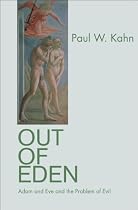 |
Title:
Out of Eden: Adam
and Eve and the
Problem of Evil
Publisher:
Princeton University Press
Author:
Paul W. Kahn
|
About the author: Paul W. Kahn is Robert W. Winner Professor of Law and the Humanities at Yale Law School and Director of the Orville H. Schell, Jr. Center for International Human Rights. |
|
|
Destroying the World to Rescue the World
The popular sovereign emerges when all members of the polity can experience the pain of politics. All citizens are equal, when all read the same history of suffering as their pain, and all stand equally before the threat of future pain—sacrifice—for the state.
At the heart of the state, we find a commitment to the willing sacrifice of all of the national resources—human and material—for the end of preservation of the state. All can be called upon to sacrifice—to suffer—for the maintenance of the state. Nuclear weapons are the perfect expression of democratic pain. A policy of mutual assured destruction is the end-point, ending in a vision of universal self-sacrifice founded on a love of nation.
|
|
Torture—or Noble Sacrifice?
Nothing is easier than to describe the horror of the battlefield. Yet, despite our knowledge of that horror, we celebrate a political history of achievement on the battlefield. The West not only experienced the destruction of a generation of young men in the First World War, it pursued the Second World War to the point of genocide and the destruction of European material wealth and civil society.
The experience in the trenches of the First World War may come to appear as nothing other than a torturous mauling and destruction of bodies. For the soldier who has lost faith in the sovereign character of a politics of sacrifice, war becomes a scene of horrendous torture: broken bodies, pain and death. Once a family loses this faith in the sovereign, it will only see the state conscripting and killing its loved ones.
The sacred loses its power and we are left with the tortured body—a residue of politics when faith in the sovereign has disappeared. Wilfred Owen captures this residue of the dying body when he writes: “What passing-bells for those who die as cattle?” Not sacrifice, but slaughter; not the transcendence of the merely human, but the evil of the loss of the human. To those who do not hear God, Abraham’s action must have looked like a bizarre torture of his son.
|
|
Destroying Witches/Killing Enemies
A secular age looks back at the wars of religion and sees in them a great evil: bodies were destroyed for “no real reason.” All the suffering and destruction to what end? Similarly, we look at the tortured destruction of witches and heretics as a kind of madness producing great evil. Once faith is gone, we are left with only tortured and maimed bodies.
So we are beginning to see our own political past. We do not see political martyrs, but senseless suffering. No longer understanding the sacred character of the political, we see only the tortured bodies of the victims. We see a field of arbitrary death and destruction that contributes nothing to the well-being that we would place at the heart of the contemporary political narrative.
Or, I should say, this is what we might begin to see—or even hope to see—but still not quite yet. The politics of the sublime, of the sacred character of the nation, recedes but is not yet gone. The popular sovereign remains a brooding presence capable of enthralling the nation. It remains a hungry god and we remain willing to feed it our children. We react in only half-forgotten ways to the attack of September 11.
|
|
Insanity—or Noble Sacrifice?
Willingness to sacrifice for the creation and maintenance of political meanings always appears inconceivable to those outside of the community. We find it incomprehensible that Palestinians would be willing to blow themselves up for the maintenance of a political identity. But the suicide bomber is not different in kind from the Israeli soldier. Both know that political identity is a matter of life and death.
Both sides in this conflict wonder at the capacity of the other to kill and be killed. We have the same reaction to the sacrificial politics of others as we do to those who believe in different gods, rituals, and sacred texts. It literally makes no sense to us; it appears “crazy.” How, we wonder, can anyone believe that the gods appeared in that object or that place? This shock of difference, however, usually does not cause us to doubt our own beliefs. We think others strange, but that does not unmoor us from our own sacred rituals. The same is true of our own political meanings
|
|
|
|
|
|