|
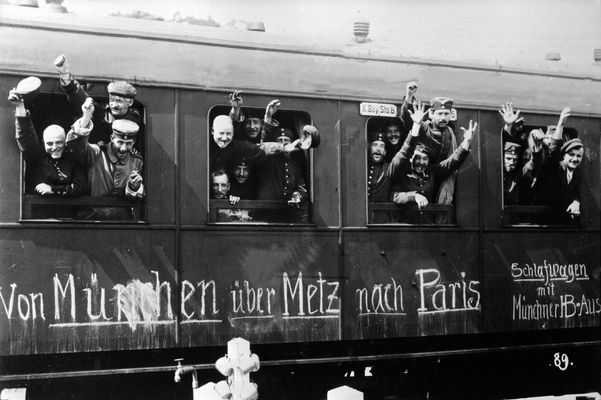
The first photo (above right) shows German soldiers in freight cars as they embarked for the Front in 1914 to fight in the First World War. Innocent, optimistic young men had no clue they were being transported to slaughter.
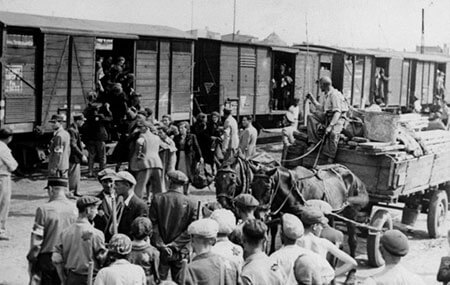
The second photo (below right) shows Jews as they embarked for death camps. Most had no clue they were being transported to slaughter.
In his study of the First World War, Denis Winter (1979) writes about the experience of German soldiers as they were transported to battle in box cars:
"After the stint at base, the railway took the men toward the front line. To a generation with visual memories of the railway lines running into Hitler’s death camps, tense faces peering from cattle trucks, there is something disconcerting about the imagery of this journey from base camp.
"The soldiers went in waggons of the same type, forty of them in each waggon, kit hanging from hoods in the roof. Death was a high probability for both generations of travelers in these cattle trucks."
The Slaughter of German Soldiers Preceded the Slaughter of Jews
|
| The boxcars that transported Jews to their deaths in the Holocaust were the same boxcars that transported German soldiers to their deaths in the First World War. |
| Below: German soldiers in cattle cars on their way to the Western Front in France |
 |
Below: Jews from the Lodz ghetto board
trains for the death camp at Chelmno |
 |
Robert Whalen reports that after four years of battle, 2,037,000 German soldiers had died; 4,300,000 were wounded; and 974,977 reported missing or wounded. Total casualties: 7,311,977.
|